Sedation Options for Nervous Patients

For some people, the hardest part of dental treatment is not the procedure itself. It is the moment they sit in the chair, hear the instruments, and feel their body tense before anything has even begun. If you have been searching for sedation options for nervous patients, you are not overreacting and you are certainly not alone.
Dental anxiety is common among adults, including people who are otherwise confident in every other part of life. We see it in busy professionals who have delayed treatment for years, in patients who need dental implants or full-mouth rehabilitation, and in people who simply had one bad experience long ago that never really left them. The good news is that modern dentistry offers more than one way to make treatment feel manageable.
Why nervous patients often need more than reassurance
A calm, caring team matters. Clear explanations matter too. But for many anxious patients, reassurance alone does not change what the body does under stress. A racing heart, shallow breathing, a strong gag reflex, trouble staying still, or fear of pain can make even a routine visit feel overwhelming.
That is where sedation can help. It is not about making a patient unconscious by default, and it is not only for major surgery. In the right setting, sedation can reduce fear, increase comfort, and help treatment move more smoothly and safely. It can also make it easier to complete more dentistry in fewer visits, which is especially valuable when someone needs crowns, root canal treatment, implants, or a more complex restorative plan.
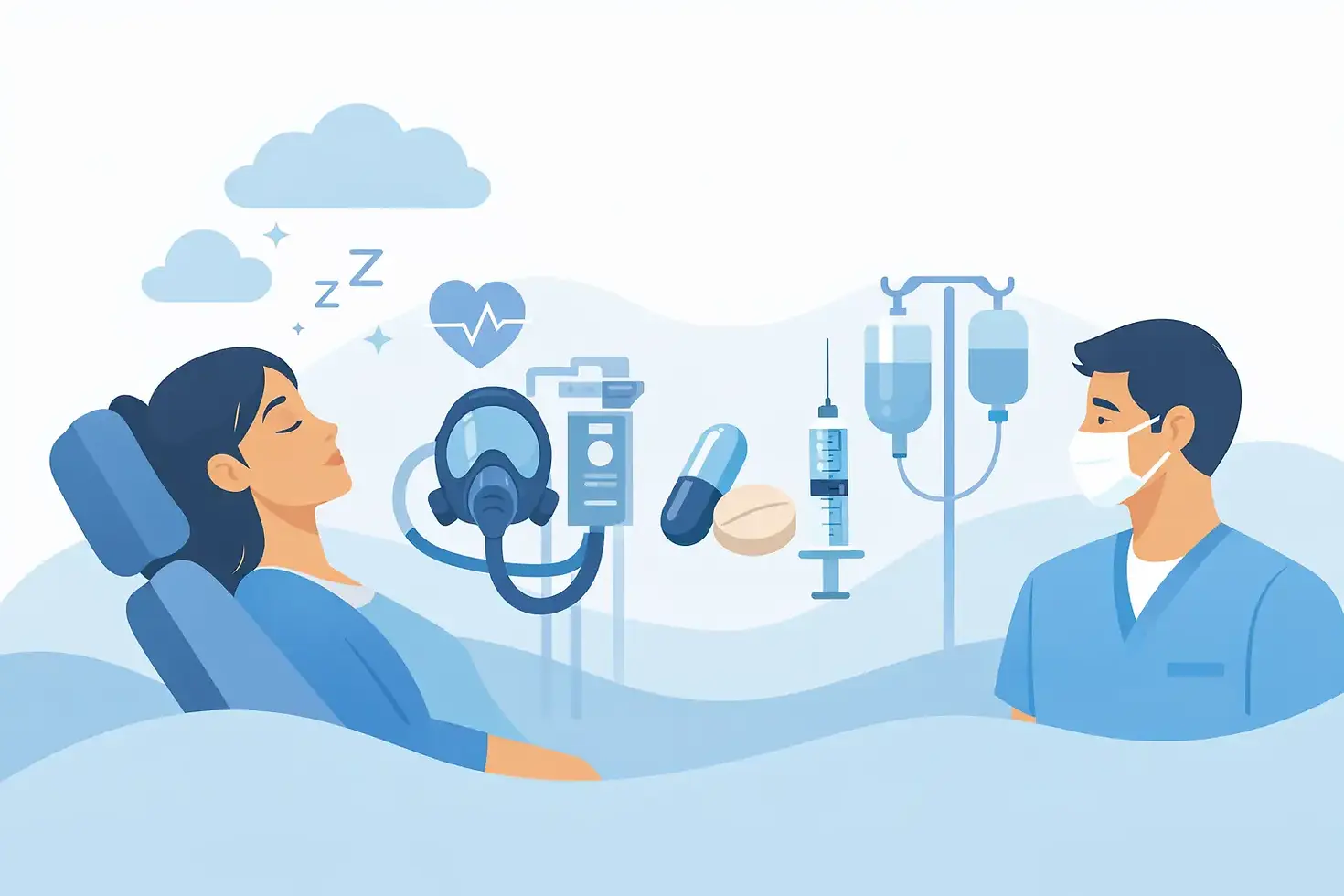
Understanding sedation options for nervous patients
There is no single best choice for everyone. The right option depends on your anxiety level, medical history, the length and complexity of treatment, and how much awareness you are comfortable having during the appointment.
Local anesthesia is not the same as sedation
This is one point that often causes confusion. Local anesthesia numbs the treatment area so you do not feel pain. Sedation helps you feel calmer and less distressed. Many patients need both. You may be fully numb but still very anxious, which is why comfort planning should consider more than pain control alone.
Minimal sedation for mild to moderate anxiety
Minimal sedation is often a good starting point for patients who feel nervous but still want to remain awake and responsive. You stay conscious, you can answer questions, and you are generally aware of what is happening, but the edge of anxiety is reduced.
One common example is nitrous oxide, often called laughing gas. It is inhaled through a small mask and works quickly. Patients usually describe feeling lighter, calmer, and less reactive to sounds or sensations around them. One practical advantage is that the effects wear off relatively fast after the mask is removed, so recovery is usually straightforward.
Nitrous oxide can be a good fit for shorter appointments, cleanings for anxious patients, fillings, or modest restorative treatment. It can also help people with a strong gag reflex. That said, it may not be enough for someone with severe dental fear or for lengthy procedures such as full-arch work or multiple implant-related steps.
Oral sedation for deeper relaxation
Oral sedation typically involves taking prescribed medication before the appointment. The goal is deeper relaxation than nitrous alone, while still allowing you to remain conscious. Many patients feel drowsy, detached from the stress of the visit, and less focused on the details of treatment.
This option appeals to people who become anxious before they even arrive at the clinic. Because the medication is taken in advance, it can help lower anticipatory fear as well as in-chair anxiety. For patients having more involved care, oral sedation may make the visit feel shorter and easier to tolerate.
There are trade-offs. The effect can be less precisely adjustable once the medication has been taken, and you will generally need someone to drive you home afterward. You may also feel sleepy for several hours. Oral sedation is often very helpful, but it should always be planned carefully with a proper review of your health history, current medications, and the exact treatment being done.
IV sedation for more complex or high-anxiety situations
For some patients, especially those facing extensive treatment or significant fear, IV sedation offers a more controlled and deeper level of relaxation. Medication is delivered through a vein, allowing the clinical team to monitor and adjust the level of sedation more precisely throughout the procedure.
Patients often remember little or only parts of the appointment afterward, which can be a major benefit for those who have postponed needed care because of fear. IV sedation is commonly considered for surgical procedures, multiple extractions, implant placement, or longer restorative appointments where comfort and cooperation are especially important.
This approach is more involved than minimal sedation. It requires careful case selection, monitoring, and recovery planning. It is not automatically the right choice just because a patient feels nervous. But when it is indicated and properly managed, it can change the entire treatment experience for someone who thought dental care would always feel unbearable.
Which sedation option is right for you?
The best answer usually comes from a consultation rather than a guess. Anxiety exists on a spectrum. One patient may be fine with nitrous for a crown preparation, while another may need oral or IV sedation to feel comfortable enough for the same procedure.
The type of treatment matters too. A short filling and a full-mouth rehabilitation are very different experiences. So are a simple hygiene visit and implant surgery. The more complex and time-sensitive the procedure, the more valuable it can be to have a sedation plan that reduces movement, tension, and fatigue.
Your medical background also plays a role. Conditions such as sleep apnea, certain heart or lung issues, pregnancy, medication interactions, and a history of adverse reactions can affect what is appropriate. That is why premium care is never just about offering sedation. It is about offering the right sedation, for the right patient, with the right protocols.
Sedation is only part of a comfort-first approach
A truly comfortable experience does not begin with medication. It begins with how the appointment is designed.
For nervous patients, details matter. A rushed consultation can increase anxiety. So can unclear explanations, surprise costs, or treatment that feels improvised. On the other hand, advanced imaging, digital planning, and a structured discussion of what to expect can make a patient feel more secure before treatment even starts.
This is especially relevant in advanced restorative and cosmetic dentistry. If you are investing in implants, crowns, smile design, or full-mouth rehabilitation, you want precision as much as reassurance. A clinic that combines modern technology with attentive communication can reduce uncertainty, and uncertainty is often what drives fear.
At Chong Dental Ipoh Garden, that comfort-first mindset is part of the larger treatment philosophy. The goal is not simply to complete dentistry, but to help patients feel safe enough to move forward with care that can genuinely restore health, function, and confidence.
Questions nervous patients should ask before choosing sedation
It helps to ask how the sedation method matches your procedure, what monitoring will be used, how recovery works, and whether you will need an escort home. You should also ask what you are likely to feel during treatment. Some patients want to be very aware and simply calmer. Others want as little memory of the visit as possible.
It is also reasonable to discuss timing. In some cases, sedation can allow more work to be completed in one visit, which may reduce the emotional burden of returning multiple times. In other cases, shorter visits with lighter support may be the better path. Neither approach is universally better. It depends on your treatment plan and your comfort level.
If fear has delayed your treatment, start there
Many adults feel embarrassed about dental anxiety, especially if they have postponed care and now need more complex treatment. But anxiety is not a character flaw, and delaying care usually makes the next step feel bigger than it needs to be. The most helpful first move is often a consultation focused on comfort, not commitment.
When patients understand their options, fear tends to lose some of its power. Sedation cannot erase every feeling, and it is not necessary for every appointment. But for the right patient, it can turn a tense, avoidant cycle into a workable experience that finally allows treatment to begin.
If you have been putting off care because the idea of sitting in a dental chair makes your stomach drop, that feeling deserves to be taken seriously. Modern dentistry has made room for comfort, and sometimes the most important treatment choice is the one that helps you feel ready to say yes.


Comments