7 Top Benefits of Digital Dentistry

A lot can change in a dental visit when you replace messy impressions, guesswork, and repeated adjustments with precise digital planning. The top benefits of digital dentistry are not just about newer machines - they are about giving patients more comfort, more clarity, and more predictable results, especially when treatment involves implants, crowns, smile design, or full-mouth rehabilitation.
For patients investing in their oral health, that difference matters. If you are considering a major treatment, you are not simply buying a procedure. You are trusting a team to restore how you eat, speak, smile, and feel. Digital dentistry helps make that process more accurate and often less stressful from the very first consultation.
What digital dentistry really means
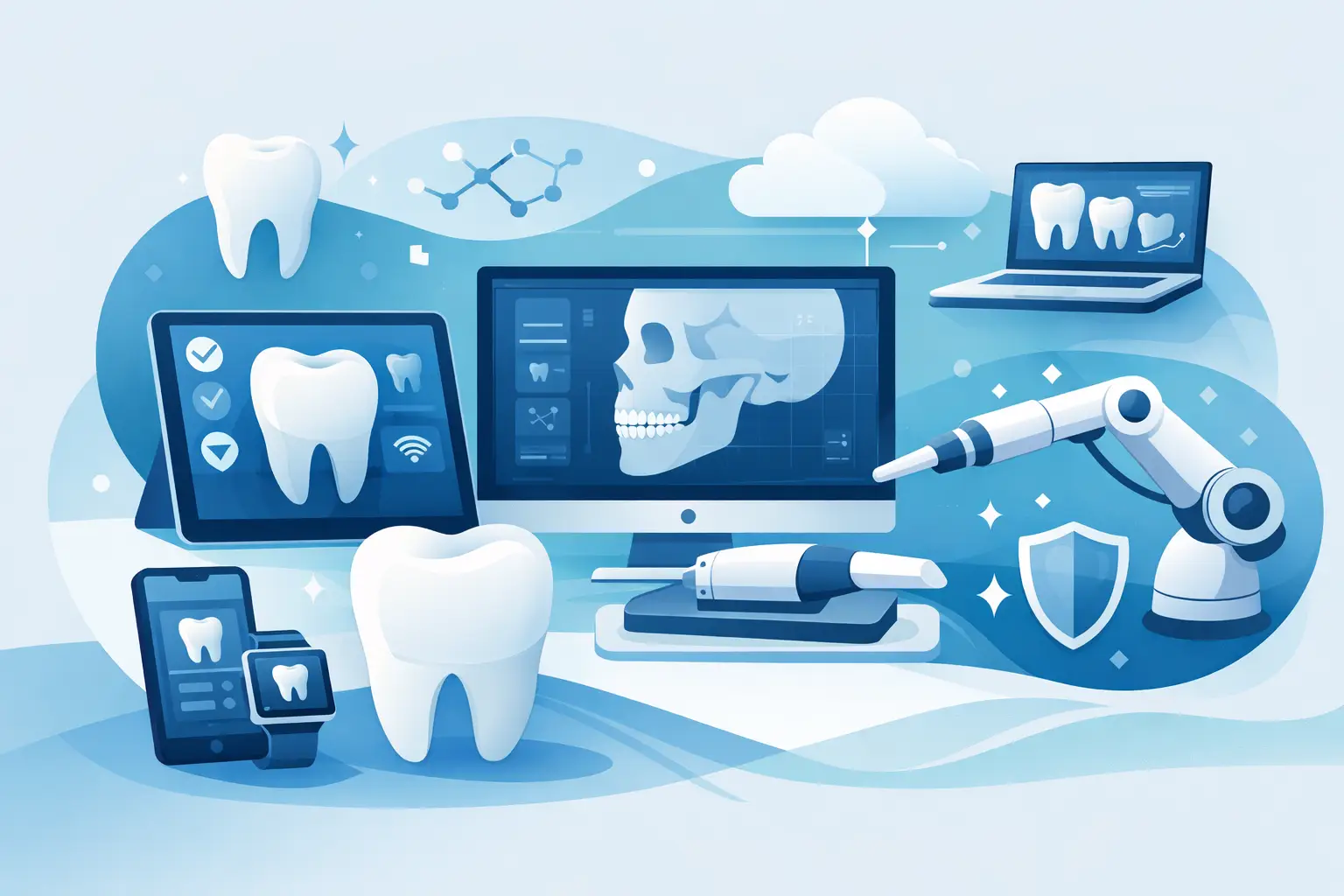
Digital dentistry refers to the use of advanced technologies to examine, plan, design, and deliver dental treatment with greater precision. That can include CBCT 3D imaging, intraoral scanning, digital smile design, guided implant planning, and digitally fabricated crowns, bridges, or dentures.
The key point is not the technology itself. It is what the technology allows your dentist to see and do. Instead of relying only on traditional molds, two-dimensional X-rays, and manual estimation, digital systems create a much fuller picture of your teeth, bite, bone, and facial structure.
That level of detail is especially valuable in restorative and cosmetic cases, where tiny differences in shape, fit, angle, and balance can affect both appearance and long-term function.
1. More accurate diagnosis and treatment planning
One of the top benefits of digital dentistry is that it gives your dentist a clearer starting point. With 3D imaging and digital scans, problems can often be identified earlier and planned more precisely.
This matters in many situations. If you are getting dental implants, your dentist needs to assess bone volume, nerve location, and sinus position with care. If you need a crown, the bite relationship and tooth preparation need to be captured accurately. If you are considering a full smile makeover, facial proportions and tooth alignment need to be evaluated as part of the whole picture.
Better information usually leads to better decisions. It can also reduce surprises once treatment begins, which is something every patient appreciates.
2. A more comfortable experience
For many adults, comfort is what finally pushes them to move forward with treatment. Traditional impressions can be unpleasant, especially for patients with a strong gag reflex, anxiety, or difficulty sitting through longer appointments. Digital intraoral scanners are often far more comfortable because they capture detailed images inside the mouth without trays full of impression material.
That sounds like a small improvement until you have experienced both. Comfort affects how relaxed you feel in the chair, how easily records can be taken, and how positive the overall visit feels.
For patients who already feel nervous about dentistry, comfort is not a luxury. It is part of good care. A more patient-friendly process can make complex treatment feel far more manageable.
3. Better precision for restorations
When a restoration fits well, you notice it in all the right ways - it feels natural, looks balanced, and does not require endless fine-tuning. Digital dentistry improves the design and fabrication of crowns, bridges, implant restorations, veneers, and dentures by capturing highly detailed measurements and transmitting them accurately to the design and production stage.
This can lead to restorations with a more precise fit and more refined contours. That is important because a poorly fitting restoration is not just annoying. It can affect bite comfort, gum health, speech, and long-term durability.
Of course, technology alone does not guarantee a perfect result. Clinical skill still matters enormously. The dentist's judgment, the treatment plan, and the quality of the lab work all remain critical. Digital tools simply support a higher standard of precision when they are used well.
4. Greater predictability in implant and full-mouth cases
Patients considering implants or extensive restorative work usually ask the same question in different ways: How sure can we be about the result?
That is where digital workflows offer one of their strongest advantages. With CBCT imaging, digital scanning, and guided planning, implant placement can be mapped with much more control. Your dentist can evaluate the bone, plan the angulation, and coordinate the future position of the final tooth or teeth before surgery begins.
In full-mouth rehabilitation, predictability becomes even more important because multiple teeth, bite relationships, and esthetic details are involved. Digital planning helps reduce the gap between what is envisioned and what is actually delivered.
It is still true that biology can be unpredictable. Healing varies from patient to patient, and some cases are more complex than others. But a digitally planned case often gives both dentist and patient a stronger sense of direction, which helps build confidence throughout treatment.
5. Faster workflows and fewer retakes
One reason patients appreciate digital dentistry is simple: it can save time. Digital records are captured quickly, shared efficiently, and adjusted more easily than traditional methods. That may shorten certain appointments and reduce the need to repeat scans or impressions.
In some cases, treatment can move forward faster because the dentist, lab, and clinical team are working from accurate digital data from the beginning. That does not mean every case becomes immediate. More advanced treatment, especially implants or full-mouth reconstruction, still takes time because healing, testing, and careful review are part of doing the job properly.
But faster does not have to mean rushed. In the best situations, digital workflows remove unnecessary delays while preserving the careful planning needed for a premium result.
6. Clearer communication and better patient understanding
One of the most overlooked benefits of digital dentistry is how much easier it can make conversations. Many patients find it hard to make decisions when they cannot fully visualize the problem or the proposed solution. Digital scans and 3D images help change that.
Instead of hearing abstract explanations, you can often see what your dentist sees. You may be able to view worn teeth, bone loss, bite issues, or spacing concerns on a screen. In cosmetic and restorative cases, digital previews can also help patients understand the intended shape, alignment, or overall smile direction.
That clarity matters because confident patients tend to make better decisions. They ask more informed questions, feel more prepared for treatment, and experience less uncertainty. For a clinic focused on personalized care, this kind of communication is not a minor feature. It is part of building trust.
7. More natural-looking, confidence-building outcomes
The final reason digital dentistry has become so valuable is that it supports results that look and feel more natural. Modern dental treatment is not only about fixing damage. For many adults, it is about restoring confidence in a way that does not feel artificial or overdone.
Digital design allows the dentist to work with fine details such as tooth proportions, smile symmetry, bite balance, and facial harmony. This is especially helpful in cosmetic dentistry, implant restorations, and full smile transformations, where the goal is not simply to replace teeth, but to create an outcome that suits the individual.
At a clinic such as Chong Dental Ipoh Garden, where digital technology and advanced restorative care work together, that combination can be especially meaningful for patients who want premium results without losing the human side of treatment. Precision matters, but so does understanding how a patient wants to look, speak, and feel after treatment is complete.
Are there any trade-offs?
Yes, and it is worth being honest about them. Digital dentistry is powerful, but it is not magic. Some cases still require traditional techniques, hybrid workflows, or additional steps. A digital scanner may improve comfort, but it does not replace careful clinical examination. A 3D image may improve planning, but it does not replace the judgment that comes from experience.
There is also the question of provider quality. Advanced tools are only as good as the team using them. Patients should not assume that every practice offering digital technology delivers the same level of planning, craftsmanship, or follow-through.
That is why the best approach is not to look for technology in isolation. Look for technology paired with a dentist who is thorough, explains things clearly, and understands both function and esthetics.
Why this matters for patients making a big decision
If you are choosing between putting off treatment and finally moving forward, the real value of digital dentistry is peace of mind. It can make treatment more comfortable, more transparent, and more tailored to your needs. It can also support the kind of precision that matters when you are restoring a single tooth or rebuilding an entire smile.
When dentistry is done well, you feel the difference every day - when you chew confidently, smile without hesitation, and stop worrying about what might go wrong. That is the real promise behind digital care: not technology for its own sake, but a better experience and a better result for the person sitting in the chair.
If you are exploring advanced dental treatment, it helps to choose a clinic that uses digital tools thoughtfully, with the same level of attention it gives to your comfort, goals, and long-term outcome.


Comments