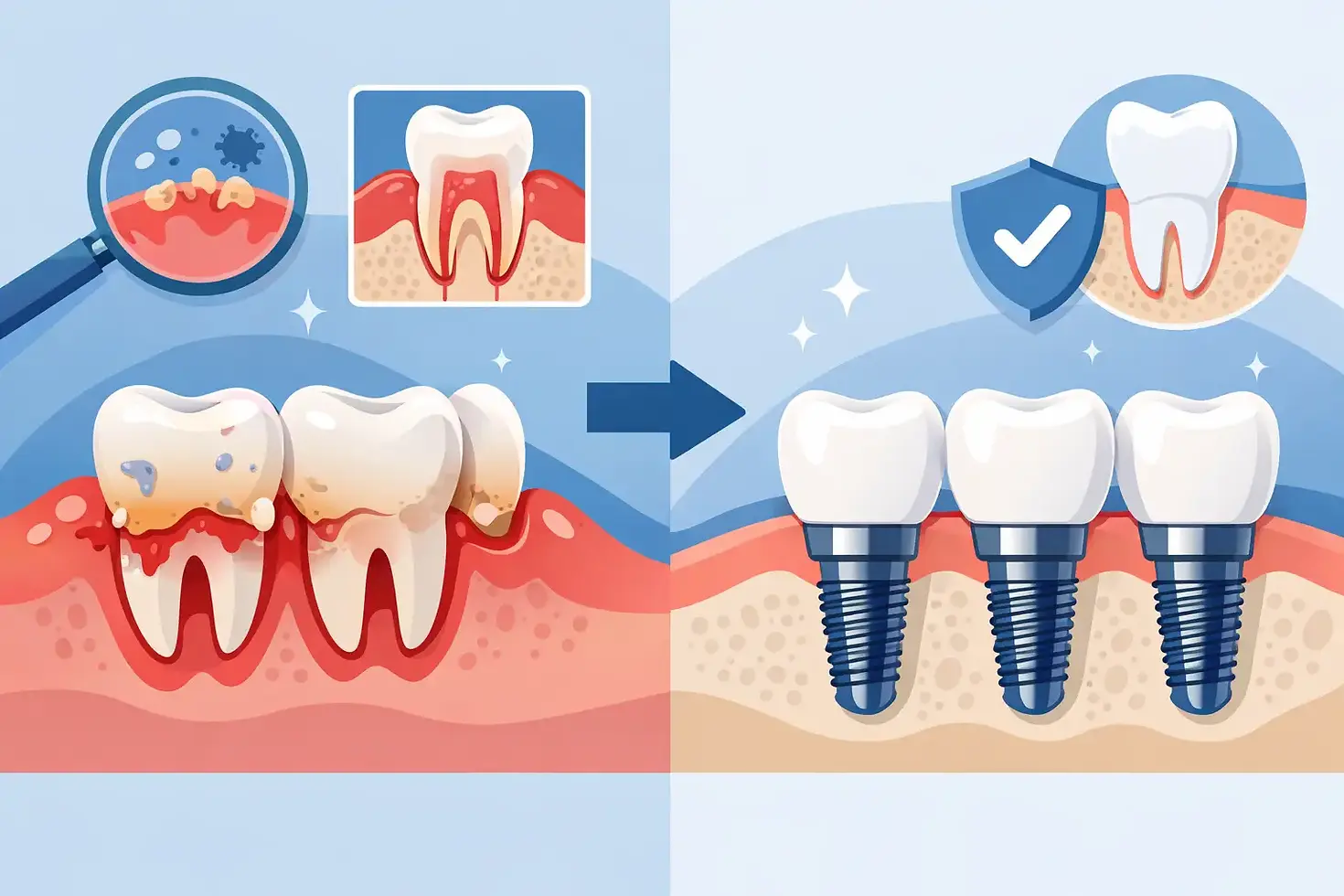
Gum Disease Before Implants: What to Fix First

If you are thinking about dental implants but your gums bleed when you brush, feel tender, or have started to recede, that detail matters more than many people realize. Gum disease before implants is not a small side issue. It can change whether implants are recommended now, later, or after a different phase of treatment.
That can feel frustrating when you are ready to replace a missing tooth and move on. But in implant dentistry, the foundation matters as much as the final tooth. Healthy gums and stable bone give implants the best chance to heal well, look natural, and last for years.
Why gum disease before implants matters
A dental implant is placed into the jawbone, but the surrounding gum tissue plays a major role in protecting it. When gum disease is present, the tissues around the teeth and implant site are inflamed and often infected. Over time, that infection can damage both soft tissue and bone.
If an implant is placed into an unhealthy environment, the risk of complications goes up. Healing may be slower. The implant may not integrate as predictably with the bone. Even if placement goes well, long-term stability can be harder to maintain if the disease process is still active.
This is one of the most common misunderstandings patients have. They assume that if the damaged tooth is removed and replaced, the problem goes away with it. In reality, gum disease is not just about one tooth. It is a condition affecting the supporting structures of the mouth. If it is not treated properly, the same inflammation that harmed natural teeth can also threaten implants.
Can you still get implants if you have gum disease?
Often, yes. But it depends on the severity of the disease and how well it responds to treatment.
Mild gum inflammation, sometimes limited to gingivitis, may only require professional cleaning and better home care before implant treatment moves forward. More advanced periodontal disease is different. If there is deep infection, bone loss, loose teeth, or widespread recession, your dentist may recommend a staged plan instead of immediate implant placement.
That does not mean implants are off the table. It usually means the mouth needs to be stabilized first. In many cases, patients can still become excellent implant candidates after the gums are treated and the condition is under control.
This is where careful diagnosis matters. A proper implant assessment should look beyond the gap where the missing tooth will go. It should evaluate the whole mouth, including gum health, bite forces, bone levels, and risk factors that could affect long-term success.
What your dentist will check before implant treatment
When gum disease before implants is a concern, the evaluation is more detailed than a quick visual exam. Your dentist will typically assess signs of active infection, plaque buildup, pocket depth around the teeth, bleeding, bone support, and the condition of neighboring teeth.
Advanced imaging can also make a major difference. CBCT 3D scans help show bone volume and anatomy with much greater precision than traditional two-dimensional imaging alone. This matters because gum disease often leads to hidden bone loss that is not fully obvious on the surface.
The goal is not to delay treatment for the sake of it. The goal is to make treatment safer, more predictable, and more durable. Premium implant care should never be rushed past the health of the supporting tissues.
Treating gum disease before implants
The right treatment depends on how advanced the gum disease is. Some patients need a thorough cleaning above and below the gum line. Others may need deeper periodontal therapy to reduce infection and help the gums heal. If certain teeth are severely compromised, they may need to be removed as part of a broader restorative plan.
Once the infection is controlled, the gums are reassessed. If the tissues are healthier and inflammation has settled, implant planning can continue. If gum disease has caused significant bone loss, additional procedures such as bone grafting may be recommended to rebuild support before an implant is placed.
This staged approach may feel like an extra step, but it is often what protects your investment. The fastest path is not always the smartest one. A well-prepared site usually leads to a calmer healing period and a stronger long-term result.
How gum disease can affect bone for implants
One of the biggest concerns with periodontal disease is bone loss. Implants need adequate bone support to anchor securely. If gum disease has been present for a long time, the jawbone may have already shrunk in the area.
That does not automatically rule out implants, but it can change the treatment plan. Some patients can receive implants after bone grafting. Others may need healing time between stages. In full-mouth cases, the strategy may be different again, especially when multiple failing teeth and generalized periodontal disease are involved.
This is why personalized planning is essential. Two people may both have gum disease, but their implant options can look very different depending on how much bone remains, where the missing teeth are, and how stable the rest of the mouth is.
Risk factors that make implant planning more complex
Gum disease before implants rarely exists in isolation. There are often other factors that influence healing and success.
Smoking is a major one. It affects blood flow to the gums and can slow healing after both periodontal treatment and implant placement. Diabetes, especially if poorly controlled, can also make infection management and healing more difficult. Teeth grinding, dry mouth, and inconsistent oral hygiene can add further strain.
None of this means treatment is hopeless. It means the plan should be honest and tailored. A good implant consultation should not only explain whether implants are possible, but also what needs to change to support a stable result.
Why some patients need to wait before getting implants
Waiting is not always bad news. Sometimes it is the reason a case succeeds.
After gum disease treatment, your dentist may want to see whether inflammation stays under control over time. This observation period can help confirm that the disease is stable and that your home care routine is strong enough to protect future implants. If grafting is needed, there may also be a healing phase before the implant is placed.
For patients who want immediate answers, this can be hard to hear. But thoughtful timing is part of high-quality care. Implants are meant to restore confidence and function for the long term, not just fill a space quickly.
Caring for implants after a history of gum disease
A past history of periodontal disease does not mean implants will fail. It does mean maintenance becomes especially important.
Patients who have had gum disease are generally at higher risk for inflammation around implants later on. That is why regular maintenance visits, professional cleanings, and close monitoring matter so much. Small issues caught early are much easier to manage than advanced peri-implant disease.
Home care also matters more than many people expect. Brushing thoroughly, cleaning between teeth and around implants, and following the maintenance schedule recommended by your dentist all help protect the result. The implant itself cannot get a cavity, but the surrounding tissue can still become inflamed if bacteria are allowed to build up.
At Chong Dental Ipoh Garden, this is where digital planning and patient-centered follow-up can make a meaningful difference. Precision in placement matters, but so does ongoing guidance that helps patients protect their results with confidence.
When to book an implant consultation
If you have missing teeth and suspect gum disease, it is worth getting assessed sooner rather than later. Bleeding gums, bad breath, gum recession, loose teeth, or discomfort when chewing are all signs that should not be ignored.
Early treatment often creates more options. In some cases, it can preserve bone and reduce the complexity of future implant care. In others, it helps you avoid starting an implant process before the mouth is ready.
The reassuring part is this: having gum disease does not automatically disqualify you from implants. It simply means the first step is not the implant itself. The first step is creating a healthy foundation strong enough to support the smile you want.
The best implant outcomes are rarely built on urgency. They are built on careful diagnosis, healthy tissues, and a treatment plan that respects both function and long-term peace of mind.


Comments