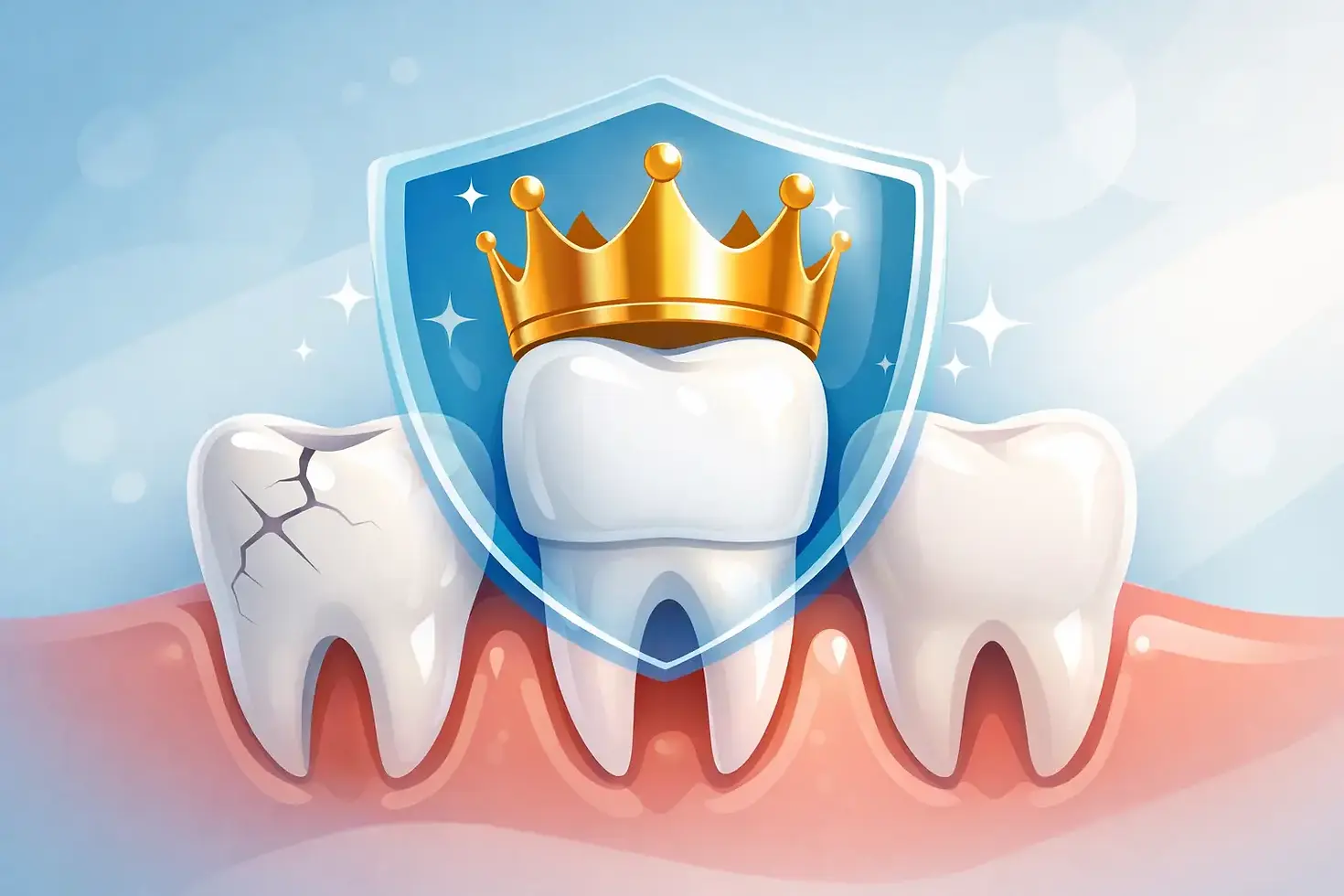
How Crowns Protect Weak Teeth

A tooth does not have to be broken in half to be in trouble. In many cases, it starts with smaller signs - a crack line, a large old filling, pain when chewing, or that uneasy feeling that one side of your mouth is no longer reliable. That is often when patients begin asking how crowns protect weak teeth, and the answer is more practical than cosmetic. A well-made crown helps a vulnerable tooth handle everyday biting forces again, while reducing the risk of further damage.
For many adults, especially those balancing work, family, and long-postponed dental care, the real concern is not just appearance. It is whether the tooth can last. If a tooth has lost too much structure, a filling may no longer be enough. This is where a crown becomes an important restorative option.
How crowns protect weak teeth in daily function
A dental crown is a custom-made covering that fits over the visible part of a tooth. Think of it as a protective outer shell designed to support what remains underneath. Unlike a simple filling, which replaces a smaller portion of lost tooth structure, a crown wraps around the tooth more completely and redistributes pressure across it.
This matters because weak teeth tend to fail under force, not at rest. Every time you chew, clench, or grind, pressure travels through the tooth. If that tooth has already been weakened by decay, a fracture, a large filling, or root canal treatment, the remaining structure may flex or crack. A crown helps hold the tooth together and reduces the chance that normal function turns into a bigger problem.
In practical terms, that protection can mean biting into food with more confidence, less sensitivity when chewing, and a better chance of keeping the natural tooth for years longer. It is not magic, and it is not suitable for every situation, but it is often the difference between a restorable tooth and one that continues to break down.
When a tooth is considered weak
A weak tooth is not always obvious from the outside. Some teeth look fairly normal but have very little strong structure left. Others already show clear signs of damage. Dentists usually become concerned when the remaining tooth is no longer strong enough to support everyday forces predictably.
This often happens after a large cavity has been removed, when an old filling takes up most of the tooth, or after a tooth has been cracked. Teeth that have had root canal treatment are another common example. Once the nerve tissue is removed, the tooth can become more brittle over time, especially if a lot of the original structure was already lost.
Wear is another factor. Years of grinding, clenching, or heavy bite pressure can weaken enamel and create fracture lines. In some cases, the issue is not one dramatic injury but gradual fatigue. The tooth survives for a long time, then starts showing symptoms when the remaining structure can no longer cope.
Common reasons a crown may be recommended
A crown is often advised when a tooth has a large filling, a crack, severe wear, a broken cusp, or has just completed root canal treatment. It may also be recommended when a tooth is too damaged for a filling but still healthy enough to save.
The key question is usually this: will the tooth hold up over time without full coverage protection? If the answer is no, a crown may be the more stable and conservative long-term choice, even if it sounds like a bigger treatment at first.
What a crown actually does
The best way to understand how crowns protect weak teeth is to look at the job they perform. A crown does not simply cover a tooth to make it look better. Its role is structural.
First, it helps brace the tooth. When the outer walls of a tooth have been thinned by decay or large restorations, they are more likely to crack under pressure. A crown helps reinforce those walls so the tooth works as one unit again.
Second, it restores shape and balance. A damaged tooth may not meet the opposing tooth correctly, which can create uneven force during chewing. A properly designed crown rebuilds the tooth so the bite is more controlled and stable.
Third, it protects vulnerable areas from further wear and bacterial leakage. If a tooth has deep damage or old restorations with breakdown at the edges, sealing and covering the tooth can help reduce new problems developing in those weak zones.
That said, a crown is not a guarantee against all future issues. If decay develops underneath it, if the tooth root has major structural problems, or if bite pressure remains uncontrolled, complications can still happen. Good planning and follow-up matter just as much as the crown itself.
Crowns after root canal treatment
One of the most common times a crown is recommended is after a root canal. Patients sometimes wonder why the tooth still needs more treatment if the infection has already been addressed. The reason is strength.
A root canal treats the inside of the tooth, but it does not rebuild the outside. In fact, by the time a root canal is needed, the tooth is often already heavily compromised by decay, fracture, or previous dental work. Without a crown, the remaining tooth may be more likely to crack when chewing.
Not every root canal tooth needs the same type of restoration. Front teeth sometimes have different force patterns than molars. Back teeth, which absorb much heavier chewing pressure, are more likely to benefit from full crown protection. The final decision depends on how much healthy tooth structure remains.
Materials matter, but fit matters more
Patients often ask whether ceramic, porcelain, zirconia, or other materials are best. Material does matter, especially when balancing strength and esthetics, but the bigger issue is whether the crown is well planned and precisely fitted.
A crown should work with your bite, not fight it. If it is too high, poorly shaped, or does not seal well at the edges, it can create new stress instead of solving the old problem. This is where careful diagnosis and modern digital planning can make a meaningful difference. Detailed imaging, accurate scans, and a well-controlled design process help create a crown that feels natural and protects the tooth as intended.
At a clinic focused on advanced restorative care, such as Chong Dental Ipoh Garden, that precision is not just about convenience. It supports comfort, function, and the long-term success of treatment.
When a crown may not be enough
There are times when a crown is not the right answer. If the crack extends too far below the gumline, if there is not enough healthy tooth left to support a crown, or if the tooth has severe structural damage in the root, saving it may not be predictable.
This is why an honest assessment matters. In some cases, a crown can buy many healthy years for a weak tooth. In others, a different treatment plan may offer a more reliable long-term result. That could involve a buildup, gum treatment, root canal therapy, or in advanced cases, extraction and replacement.
The right approach depends on the whole picture - not just the visible damage, but the condition of the tooth, the surrounding bone and gums, your bite, and your long-term goals.
Signs you should not ignore
If you are noticing pain when biting, sensitivity on release, a tooth that feels fragile, or an old filling that seems to be failing, it is worth having it evaluated sooner rather than later. Weak teeth rarely become stronger on their own. The longer a compromised tooth remains under pressure, the greater the chance that a manageable issue becomes a more serious fracture.
Early treatment is often more conservative than delayed treatment. A tooth that can be protected with a crown today may become much harder to save if it breaks deeper later.
The bigger benefit is confidence
One of the less talked-about benefits of a crown is peace of mind. Patients with weak teeth often chew carefully on one side, avoid certain foods, or worry that the tooth could break at the wrong moment. Once the tooth is properly restored, daily life feels easier again.
That confidence matters. Dental treatment is not only about repairing damage on an X-ray. It is also about helping you eat comfortably, speak naturally, and stop second-guessing every bite. When a crown is chosen for the right reason and made with care, it can do exactly that.
If you have a tooth that feels unreliable, the best next step is not to wait for it to prove you right.


Comments